Rochester’s Mini-Forest: Where Grassroots Passion and City Government Grow Together on an Old Garbage Dump
Community: City of Rochester
Population: 6,001-12,000
Project Description
Rochester’s first mini-forest transformed a former garbage dump into a thriving native ecosystem. In May 2025, the City of Rochester’s DPW, Parks Department, City Beautiful Commission, Rochester Tree Committee, and Rochester Pollinators united 36+ volunteers — Boy Scouts, Girl Scouts, Rochester High School students, North Oakland Wild Ones, and the Daughters of the American Revolution — to densely plant 290 native trees and shrubs using the Miyawaki method. Funded by the Community Foundation of Greater Rochester and First State Bank, the ribbon-cutting drew 100+ residents. A new asphalt trail connects the site to a nearby nature preserve and park, creating a green corridor and drawing regular visitors eager to watch it grow. Future plans include a bench and educational signage. The project has inspired a 7-stop SE Michigan mini-forest tour on June 7, 2026. Full workplans are publicly available for any Michigan community to replicate.
Is your project easy to replicate in other communities (clear in its impact and execution for other communities)?
Yes — and the proof is already showing. Rochester Pollinators published their complete work plan, native tree and shrub list, and planting grid layout online for free access. The Miyawaki method itself has free training available through the Canadian Green Communities Initiative, and the nearby Ann Arbor Buhr Park mini-forest served as an early model. Multiple Michigan municipalities have already visited the Rochester site to learn from it firsthand, and on June 7, 2026, Rochester will co-host a 7-stop SE Michigan mini-forest tour, connecting communities already inspired to replicate this work. Mini-forests are gaining momentum across Michigan, across the United States, and around the world — transforming vacant and degraded urban land into native ecosystems in communities of every size. Rochester is proving that Michigan cities don’t have to watch from the sidelines. As Councilmember, Marilyn Trent put it: “My hope is every city in Michigan will plant a mini-forest.” Any municipality with a vacant lot and a willing community partner can follow this roadmap.
What is the Community Wealth Impact (based on one or more of the categories you selected) of your project?
This project advances sustainability by restoring a native ecosystem on previously degraded land. Measurable environmental benefits include absorbing 25,000–30,000 gallons of rainwater annually, sequestering 450–700 lbs of CO₂/year now and 1,800–2,000+ lbs by year 10, cooling surface temperatures by 5–10°F, and supporting 500+ insect species. A new asphalt trail connects the mini-forest to a nearby nature preserve and park, creating a green corridor for ongoing community use. Planned educational signage will make it a living classroom for teachers, students, and visitors.
The mini-forest also deepens Rochester’s nationally recognized commitment to ecological stewardship. The city holds the Mayor’s Monarch Pledge through the National Wildlife Federation — it is the only Monarch Champion City in Michigan and one of just 8 in the nation, now in its fourth consecutive year. Milkweed planted throughout the mini-forest directly supports that mission. Rochester is also designated a Bird City and a Tree City, making this project a natural extension of a community-wide conservation identity that is rare in Michigan and the nation.
Describe the creativity and originality of your project.
Transforming a former garbage dump into a self-sustaining native woodland is a striking act of ecological imagination — and a powerful symbol of what communities can reclaim. The Miyawaki method, which grows forests ten times faster than conventional planting through dense, multi-layered native species, remains rare among Michigan municipalities. Rochester is an early adopter and is already becoming a model for the region.
What makes this project especially original is the public-private partnership that brought it to life: a volunteer-driven pollinator nonprofit partnered with four city entities, two community funders, and the Rochester Regional Chamber of Commerce — proving that when grassroots passion meets government support, remarkable things grow. A new asphalt trail linking the mini-forest to a nearby nature preserve and park turned a once-neglected lot into an unexpected green corridor. Plans for a bench and educational signage will deepen its role as a place to learn, reflect, and connect with nature. As Mayor Salvia said at the ribbon cutting: “It’s a legacy for future generations, showing what’s possible when a community comes together to care for the earth.”
Project Multimedia
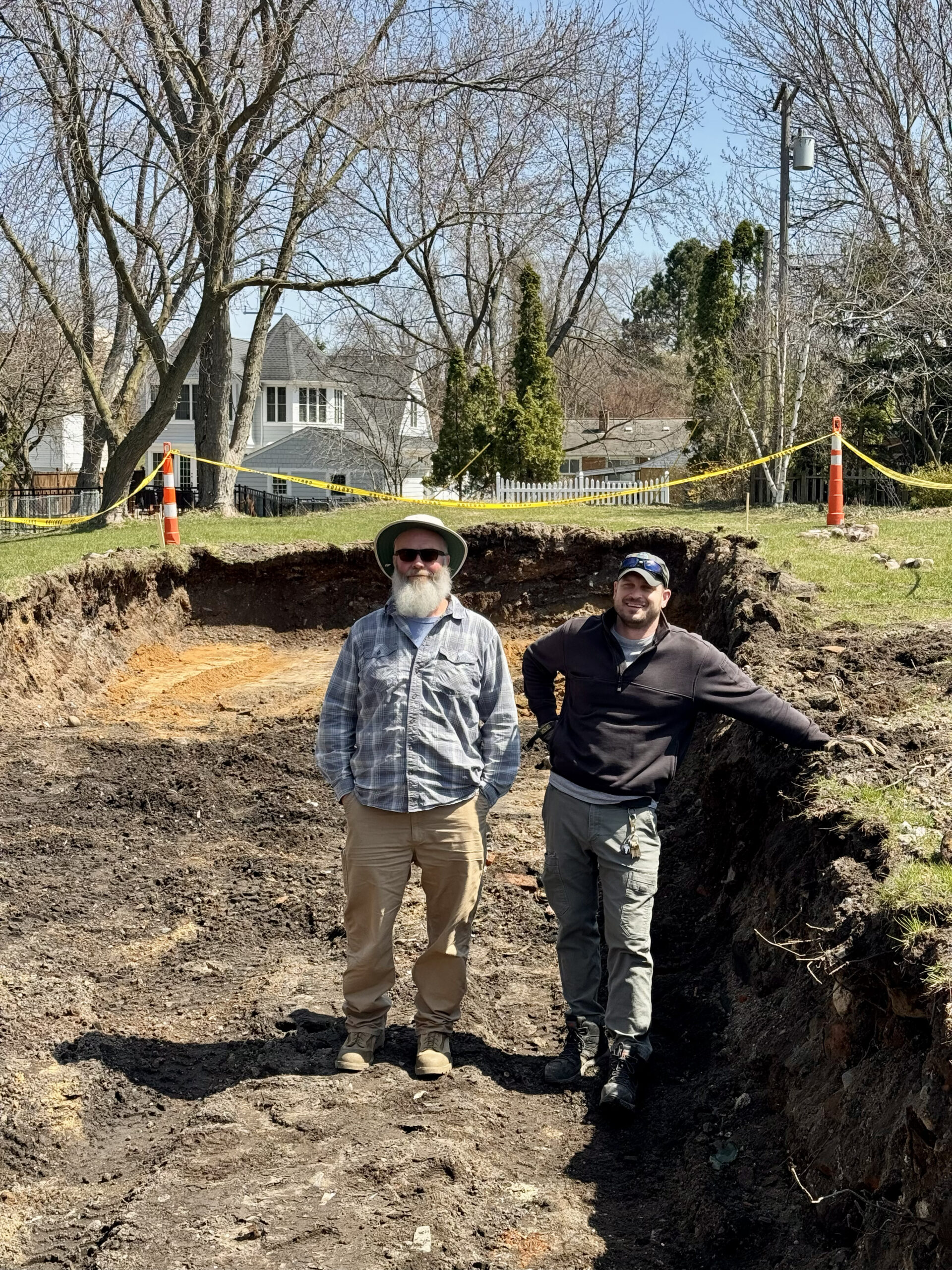
Colin Petit (DPW) and Parks Department Director Karl Meijer survey the freshly excavated plot that will become Rochester’s first native mini-forest.
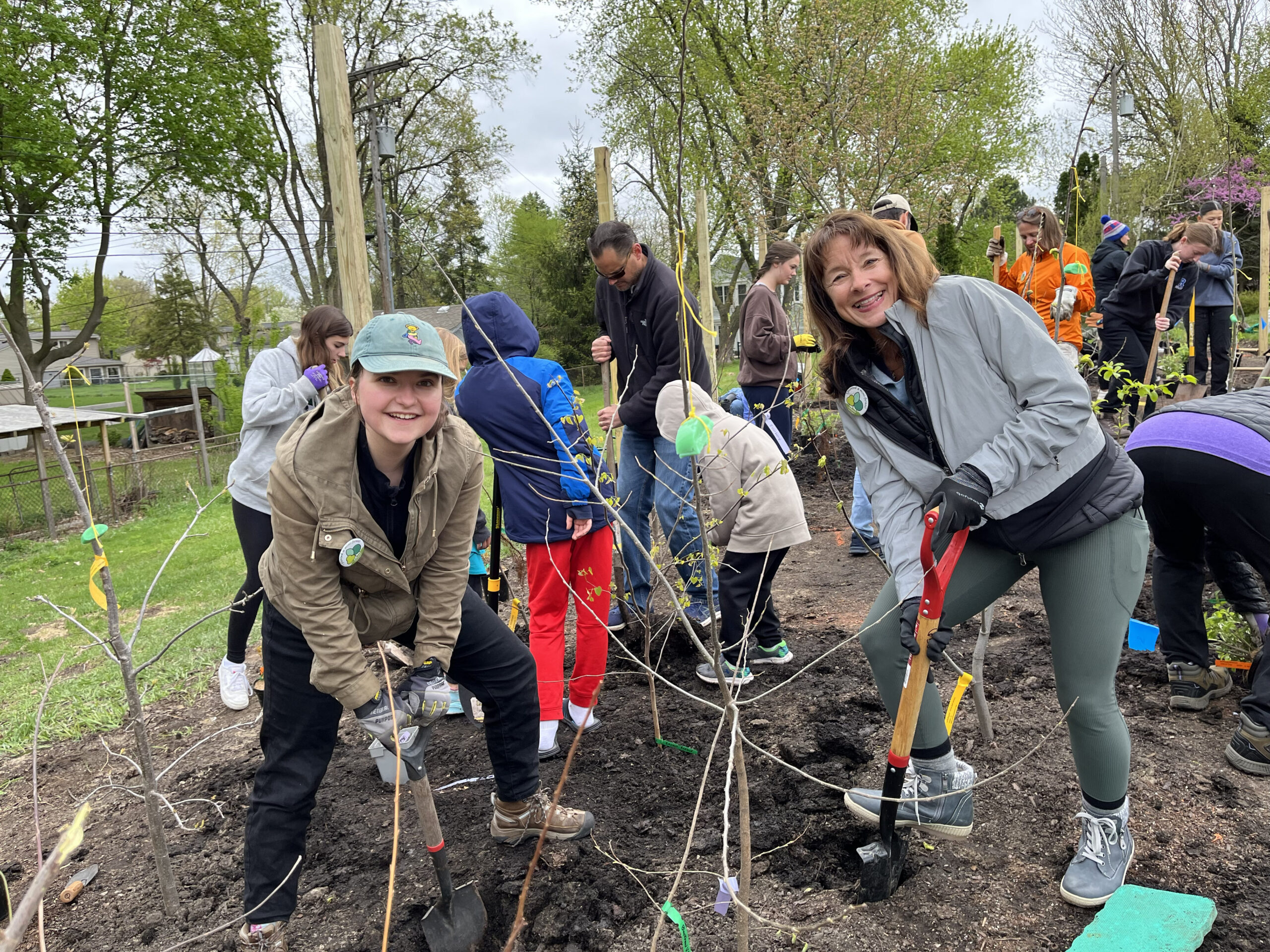
Mayor Salvia joins 36 volunteers — students, families, scouts, and community members — putting Rochester’s first mini-forest in the ground, one native tree at a time.

More than 100 residents turned out for the ribbon cutting on May 3, 2025, hosted by the Rochester Regional Chamber of Commerce, celebrating the planting of Rochester’s first Miyawaki mini-forest.

Three months after planting, Rochester’s first mini-forest is already becoming a woodland. Native trees reach toward the sky and milkweed blooms for pollinators — the Miyawaki method delivering on its promise.