Buchanan Downtown Redevelopment Initiative
Community: City of Buchanan
Population: Under 6,000
Project Description
We are not unlike most Michigan communities. We were settled by pioneers, built by industry, and left to reinvent ourselves when that industry moved on. What sets Buchanan apart is what we opted to do next.
In 2025, we completed a $19.4 million downtown overhaul, replacing water main, storm sewer, and sanitary sewer systems that had not been touched in almost 100 years. We protected McCoy Creek, the natural waterway running through the heart of our downtown, through an aerial crossing that avoided disturbing the creek bed. We also installed four stormwater separation units that filter sediment, debris, and free-floating oil before water returns to the natural system.
Our downtown streetscape was rebuilt using a tabletop design, the first of its kind in Southwest Michigan, converting our roadways into flexible plaza space for community gathering year-round.
This is the foundation for our next 100 years. Buchanan is open for business.
Is your project easy to replicate in other communities (clear in its impact and execution for other communities)?
Yes!
Our story is the story of hundreds of Michigan communities. Industry came, industry left, infrastructure aged, and the question became what to do next. The path we took is transferable, step by step, to any municipality facing the same reality.
The USDA Rural Development loan program is available to rural and small urban communities across Michigan and the nation. The 1.375% interest rate we secured is not unique to Buchanan. It reflects a funding program that most eligible communities have never fully pursued. The stormwater separation units are a commercially available product that any engineer can specify. The tabletop street design requires no proprietary technology, only the willingness to think differently about how a downtown street functions. The coordinated multi-system approach is supported by state-level programs designed to help Michigan communities identify and align overlapping infrastructure needs.
What made our project possible was not a unique set of circumstances. It was preparation. Years of asset management planning, capital improvement documentation, community visioning, and market analysis meant we were credible and ready when funding opportunities arose. Readiness is replicable and is the most important lesson this project offers to other communities.
Any Michigan municipality with aging infrastructure, a documented vision, and the willingness to pursue layered funding can follow this path. We did not need to be exceptional to do this. We just needed to be ready.
What is the Community Wealth Impact (based on one or more of the categories you selected) of your project?
Infrastructure is the prerequisite for everything else a community wants to be. We understood that before new housing, before new businesses, before the gathering spaces our residents would actually use, the bones had to be right.
Our $19.4 million downtown infrastructure project removes a ceiling that had quietly limited our growth for decades. Water main, storm sewer, and sanitary sewer systems installed as long as a century ago constrained our capacity to support new housing development, attract new businesses, and handle the density a revitalized downtown requires. That constraint is now gone.
Housing demand in Buchanan is acute. Homes sell within hours of listing. We have struggled to supply what people clearly want because our aging infrastructure could not support new development. This project opens that door. Our Vision Buchanan plan and our data-driven market analysis identified a $217 million retail gap and nearly $250 million in projected retail opportunity by 2029. None of those projections are achievable without the water and wastewater capacity this project creates.
The financial structure of this project is itself a community wealth story. It was originally designed at up to $30 million. Through disciplined prioritization and strategic use of available funding programs, we delivered it at $19.4 million, a responsible outcome for a city of 4,500 people. The anchor is a 40-year USDA Rural Development loan at 1.375% interest, dramatically lower than the four to five percent rates available through conventional bond markets, meaning manageable debt service for generations to come. Layered on top of that: MDOT funding, an MEDC Revitalization and Placemaking grant, and Congressional District Support funds with U.S. Rep. Tim Walberg’s office represented officially at our ribbon cutting. We assembled a funding stack that larger communities have failed to achieve, because we were prepared, documented, and ready to act.
The community engagement woven throughout this project reflects our understanding that infrastructure is not just a technical problem. It is a public trust issue. We brought residents and business owners into the process through public meetings and open houses. Construction progress was documented and shared through social media, generating organic community engagement as residents spread the story of our transformation through their own networks. A months-long construction disruption became a shared community narrative.
Hundreds of our residents gathered at the ribbon cutting in November 2025 alongside local and county officials, state agency representatives, the Governor’s office, USDA, and Congressional representation to declare Buchanan is open for business. This level of alignment does not happen without years of deliberate relationship-building and genuine community investment.
Our tabletop streetscape converts downtown roadways into flexible plaza space, directly supporting the foot traffic, retail activity, and gathering culture that drives downtown economic health. When our hardware store owner Joe Krueger stood at the ribbon cutting and said, “This is the foundation of a new century,” he was not being sentimental. He was describing exactly what this project does for Buchanan and for every community watching.
Describe the creativity and originality of your project.
What distinguishes our project from a standard infrastructure replacement is the breadth of intention behind every decision and the team assembled to carry it out.
A project of this nature could have been approached as a purely utilitarian exercise: replace the old pipes, repave the road, move on. We chose a different approach. Our project team included not only civil engineers but environmental specialists and landscape architects, professionals whose presence signals that this was never only about what lies underground.
Our environmental team made deliberate decisions to protect McCoy Creek, the natural waterway that runs through our downtown and anchors our entire placemaking vision. Rather than boring beneath the creek bed, they designed an aerial crossing, suspending infrastructure above the water on support structures to avoid disturbing the creek’s environmental and historic character. That was a values decision demonstrated through engineering.
The stormwater treatment component reflects the same thinking. Four stormwater separation units use hydrodynamic separation technology with no moving parts, operating entirely under gravity flow, to remove sediment, debris, and free-floating oil from stormwater before it returns to McCoy Creek. Most municipalities at our size pipe stormwater away and consider the problem resolved. We chose to return clean water to the creek that our entire downtown future is built around. That was an environmental decision and a community identity decision at the same time.
Our tabletop street design is the most visually original element and the most immediately understood by residents. By eliminating curbs and rebuilding our downtown streetscape at a unified grade, we created a surface that functions as a conventional street on ordinary days and transforms into a community plaza during festivals and events. No permits, no barriers, no setup infrastructure required. The first of its kind in Southwest Michigan, this design directly embodies the community gathering culture that our vision documents describe, and that post-pandemic small town life increasingly demands.
Perhaps the most underrecognized creative element is how we brought our community into an infrastructure project, typically the kind of work residents endure rather than celebrate. Construction progress was documented and shared through social media, generating organic engagement as residents spread the story of our transformation through their own networks. Business owners who navigated eight months of a construction obstacle course showed up at the ribbon cutting not with frustration but with pride. That outcome does not happen by accident. It is the result of deliberate, original thinking about what community engagement in an infrastructure project can and should look like.
Our project distinguishes itself not because any single element is without precedent, but because the combination of environmental protection, stormwater innovation, original streetscape design, layered funding strategy, and genuine community engagement reflects a level of intentionality that sets a standard for what infrastructure investment in a small Michigan city can achieve.
Project Multimedia
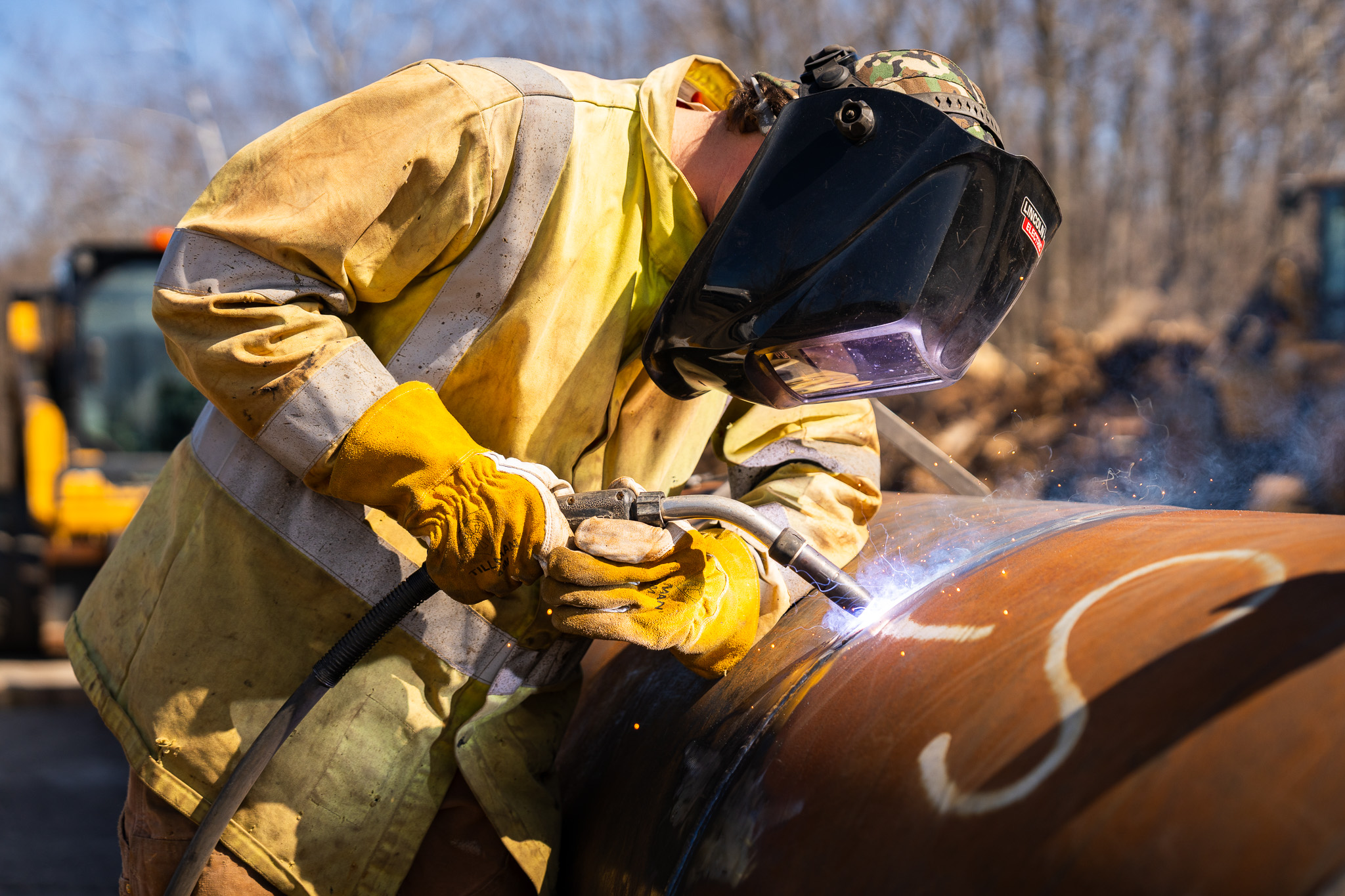
Photo #1 Welding the Casing on the Aerial Crossing over McCoy Creek
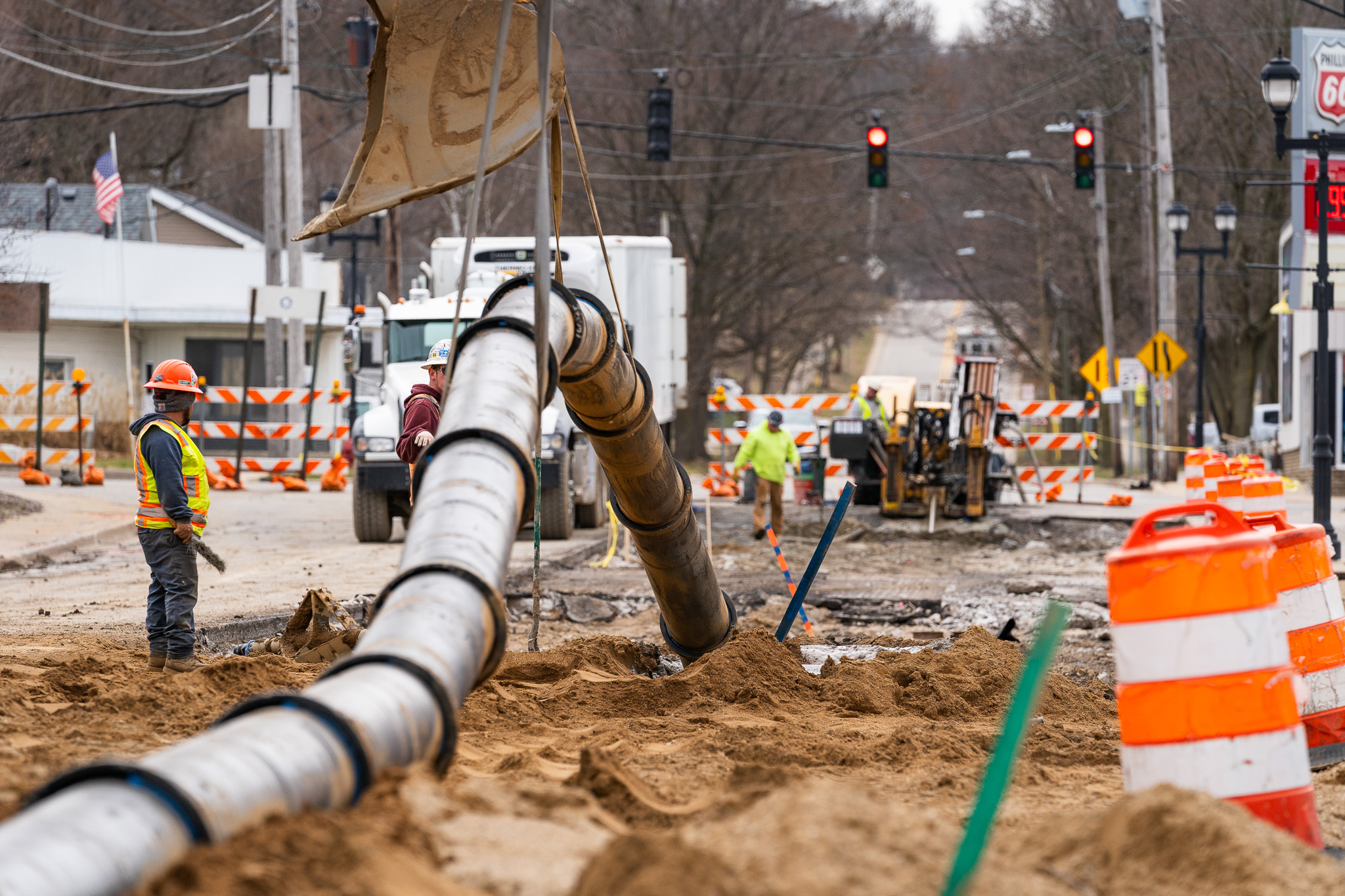
Photo #2 Directional Drill of Water Main under McCoy Creek
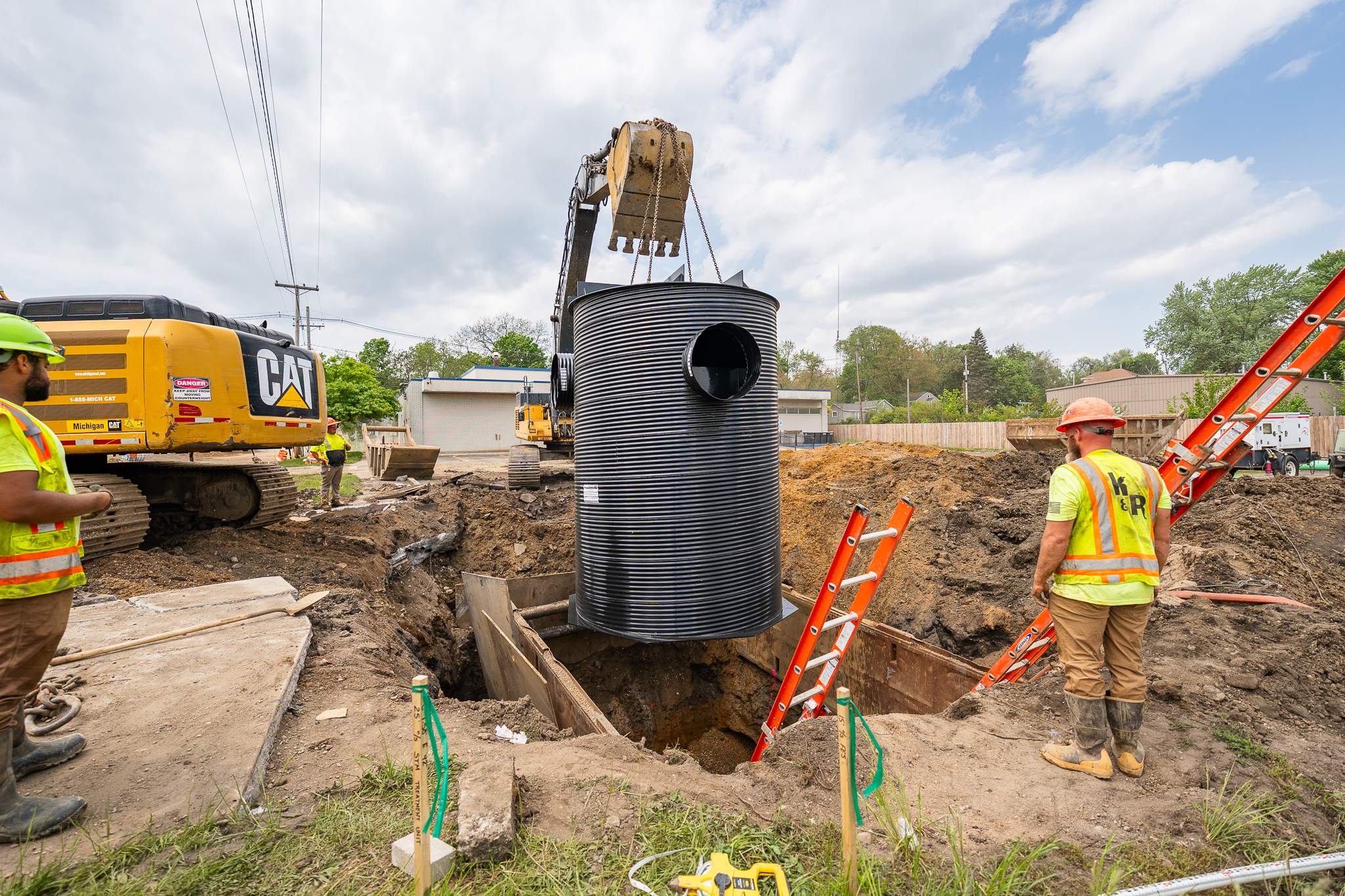
Photo #3 Storm Treatment Unit Being Installed
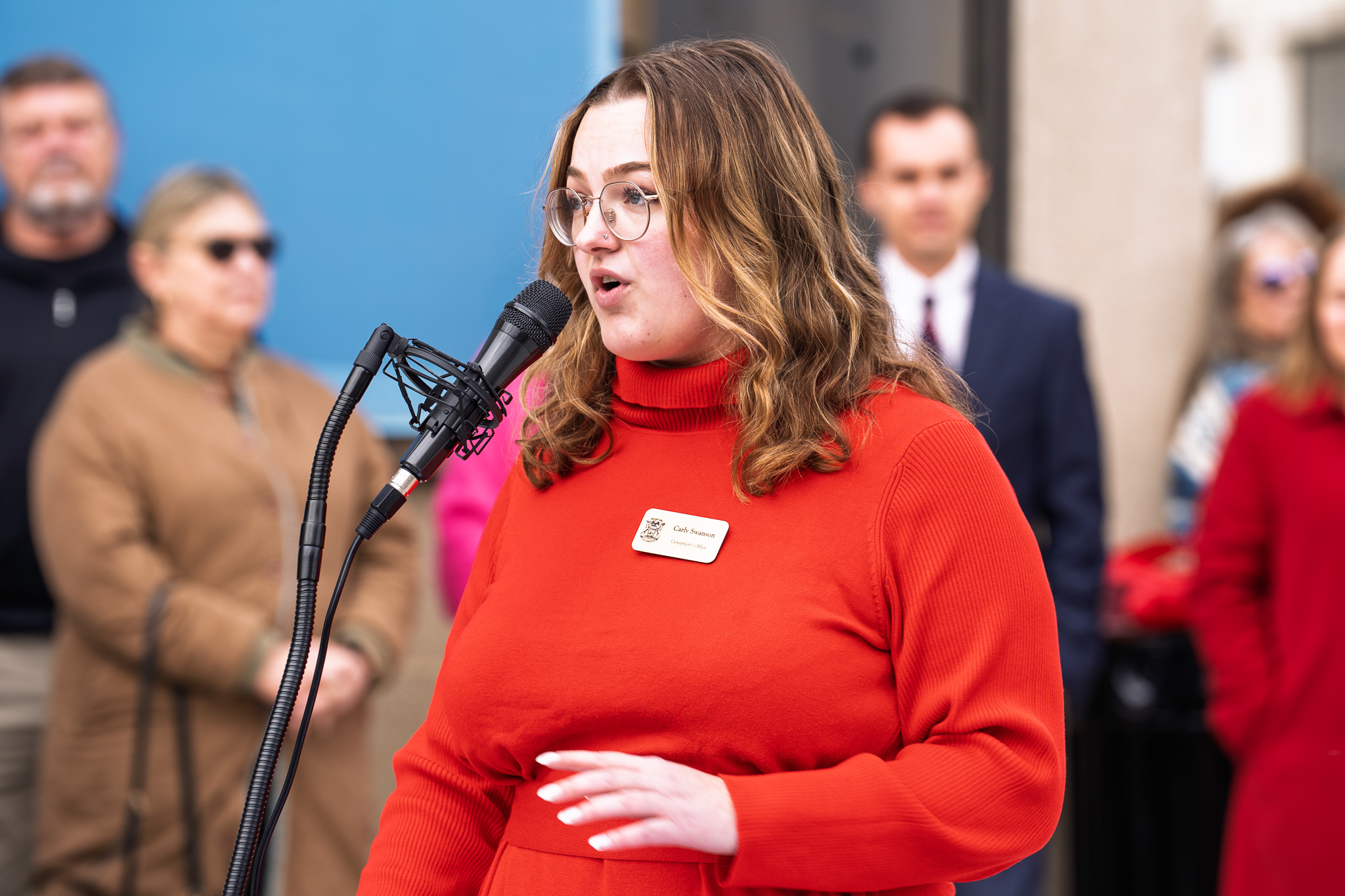
Photo #4 Carly Swanson, Governor Whitmer’s Office @ Ribbon Cutting