CEA 2025: Public-Private Partnerships
By: Emily Landau,
August 12, 2025
In our series on the 2025 Community Excellence Award applicants, we profile two Michigan communities that linked up with private entities to the immense benefit of their residents. Through public–private partnerships, the Village of Sparta doubled its childcare capacity, and the City of Ypsilanti is unveiling its first new housing development in over half a century.
The Village of Sparta Sows Seeds for Childcare
2025 Community Excellence Award Entries: Public–Private Partnerships
Children: They need caring for, pretty much 24/7. Traditionally, the role of childcare is filled by parents or other relatives. But what’s to be done when those guardians must work for a living? Someone else needs care for their children. But professional childcare facilities cost money, and there are always more children in need of care than there are facilities to take them. What’s to be done?
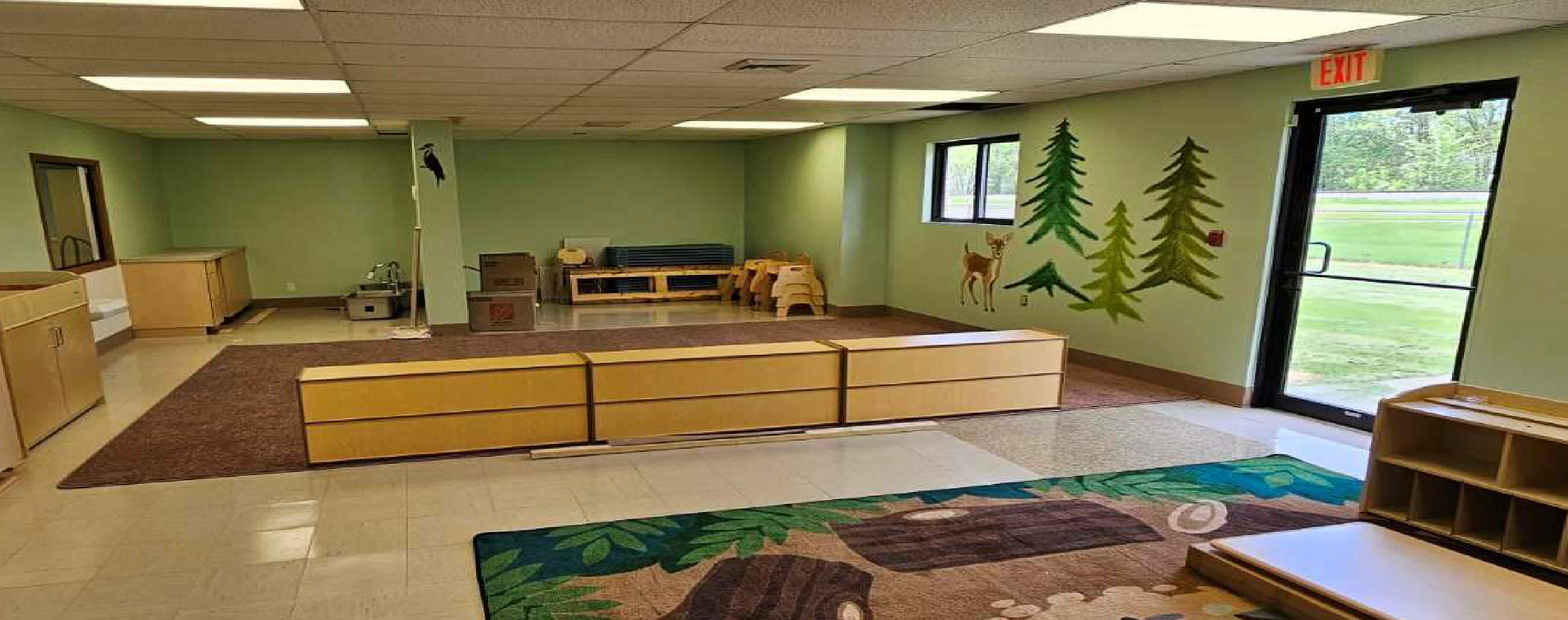
For readers of the League’s People & Place Blog who just phased in from another dimension, the above is a critical issue facing parents and caregivers across the United States. The Village of Sparta (a community of about 4,200 in northwestern Kent County) landed on a creative local solution to the issue: an innovative collaboration and adaptive reuse project, resulting in a brand-new daycare facility with room for 85 Spartan children and jobs for 24 Spartan adults. This achievement in public–private partnerships is Sparta’s submission for the 2025 Community Excellence Award.
“We were hearing from people that we needed more daycare,” said Jim Lower, Village Manager of Sparta. “But everything’s so expensive right now for providers to be able to not only buy a building but then remodel it and meet all the licensing and code requirements. That’s where the Village felt like we could come in and smooth those costs.”
“
The ROI, from a societal standpoint, is huge.
It all began with the windowless, flat-roofed block building on Evergreen Street. Owned by the county and originally used for social services, it had sat vacant for years before Sparta bought it. Its condition was the epitome of ‘good bones, needs work.’ Although it had once briefly been leased to a childcare provider, “the rules and regulations surrounding [childcare] had actually changed quite a bit,” says Lower. “It needed a lot of modernization and upgrades.” That included new HVAC systems, cabinetry, flooring, a full kitchen remodel, and new fire alarms. To give the kids natural light, the Village blasted windows into the exterior walls. The renovations ultimately cost about $100,000.
The next step was finding the right provider. Lower ended up researching and writing the request for proposals (RFPs) himself. “You know how, being MML, we always try to work as a team and talk to other cities and villages and see, ‘Hey, does somebody have an RFP for this?’ Well, it’s never been done before, actually,” he said. “Creating something new that nobody’s ever done before is always fun and challenging.”
The winning match was a familiar face: Sowing Seeds, a local provider with a successful daycare on State Street, on the south side of Sparta. “They had a great business there, and parents felt like it was very well run and a safe environment,” said Lower. “But they just didn’t have the resources to open a new building without the help of the Village.”
The original idea was to have the provider pay for renovations and then recoup the costs through reduced lease payments. “It made more sense for the Village to front those costs and then get paid back by the provider over time,” said Lower. The revised lease agreement allowed Sowing Seeds to customize the interior. “I didn’t necessarily want to be the one picking the colors,” he laughed.
Word of the new facility spread quickly through newsletters, social media, and community coffees. Allison Houseman, the owner of Sowing Seeds, had a waiting list of 160 Spartan families before the lease agreement was even approved by the Village Council in January 2024, where the motion passed unanimously.
The new Sowing Seeds location had its soft open in June 2024 and was fully operational by autumn of that year. “In terms of bang for your buck… we put $100,000 into this, and it created 24 jobs and 84 childcare spots,” says Lower. “I don’t love being a landlord by any stretch. It’s not usually what a City or Village wants to do, but we’re in strange times nowadays, and sometimes you got to go outside your comfort zone.”
“The ROI, from a societal standpoint, is huge.”
With Dorsey Estates, Ypsilanti Debuts New Attainable Housing
2025 Community Excellence Award Entries: Public–Private Partnerships
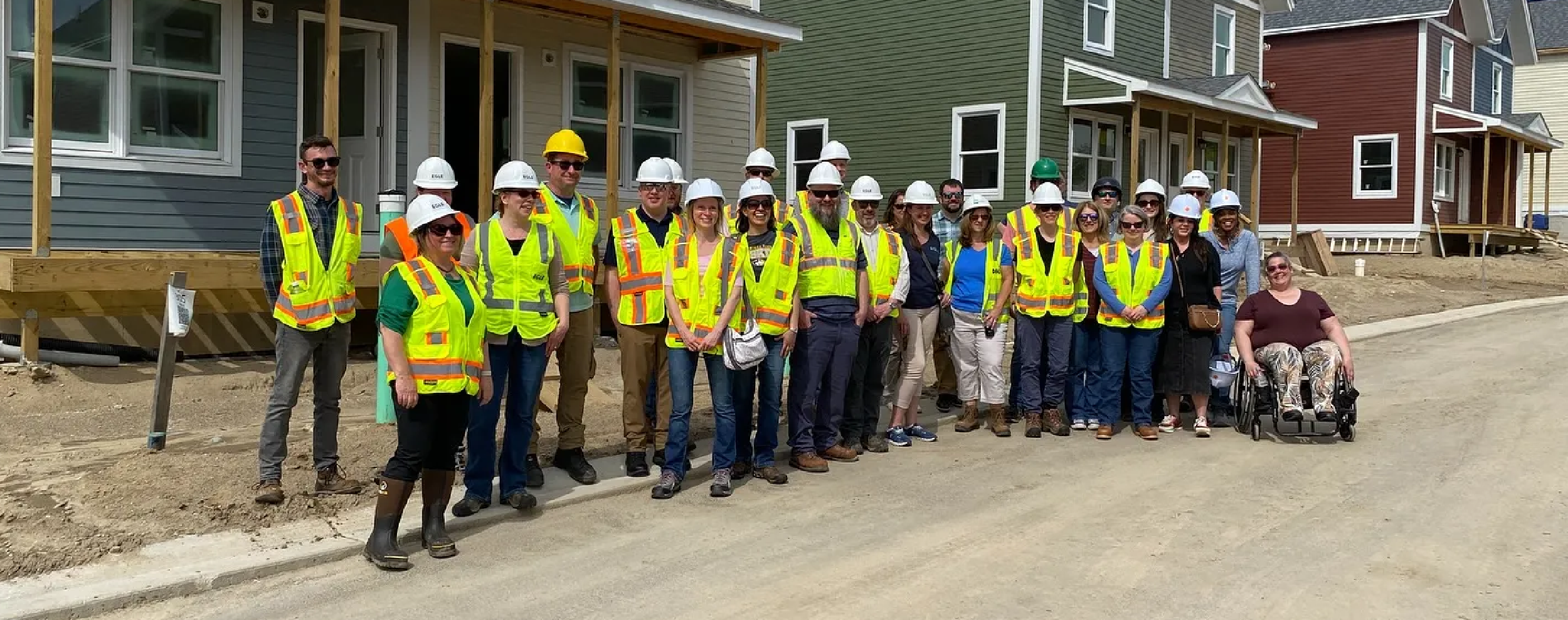
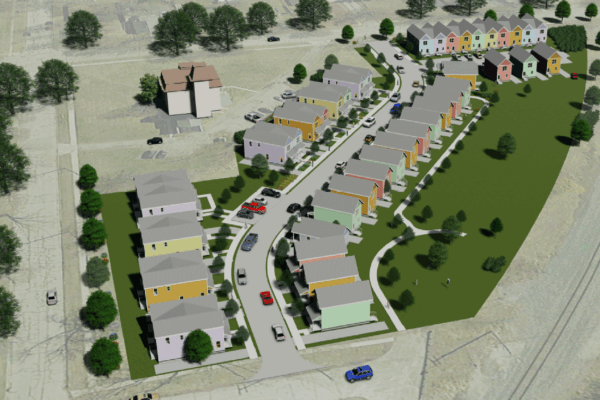
Something unusual is happening in Ypsilanti: New homes are going up. And not just any new homes: Affordable, attainable new homes, just a few blocks from the city’s historic and extremely cool Depot Town district. Dorsey Estates is a 46-unit residential development, “the first new development in the city since the 1960s,” said Community Services Director Joe Meyers. “This is one of the coolest projects I’ve ever gotten to work on in my career.” Dorsey Estates is Ypsilanti’s entry for the 2025 Community Excellence Award.
Named in honor of Maddie Dorsey, the first Black woman to serve on Ypsilanti’s city council and a fierce opponent of redlining and urban renewal, the project combines market-rate and income-restricted homes. “All the materials being used are wood siding, wood windows, high quality, durable, long-lasting materials,” says Meyers. “With a historic district, you don’t want to ‘fake’ history. You want to make sure that it’s going to look ‘in place’ in that neighborhood.”
Owned by the City for over half a century, the five-acre brownfield parcel by the train tracks was the site of Ypsilanti’s parks facilities, later housing a Boys and Girls Club before sitting vacant for nearly a decade. In the middle of the pandemic, the City connected with Renovare Development, a Detroit-based, women-owned firm. “They said, ‘Hey, we’re looking to partner with cities to bring the projects that the city wants to see,’” said Meyers. “We showed them this property, and they loved it.”
According to its website, Renovare (Latin for “to make new again”) “focus[es] on transformational projects in urban areas … that serve a deep community need.” To that end, attainability and affordability were goals from the start. Half the homes are priced for buyers earning 40, 60, or 80 percent of area median income (ranging from $95,000 to $190,000) and are deed-restricted to remain in that affordability tier in perpetuity. Even the market-rate homes, listed at $220,000, are being sold well below what it cost to build them.
 The capital stack is a mélange of public and philanthropic support: brownfield remediation grants, ARPA funds from Washtenaw County, a Missing Middle Housing Program grant from Michigan State Housing Development Authority (MSHDA), and early investment from the Ann Arbor Community Foundation. “A lot of different financing tools, but everything came together,” says Meyers. “Some of the aspects won’t be able to be replicated. I don’t think ARPA is coming back. But we’re hoping that the State continues the Missing Middle financing, and EGLE continues the brownfield funding, because you can do a lot of really creative things.”
The homes in Dorsey Estates are two-story cottages, townhomes, and duplexes, all two bedrooms and 1.5 baths, ranging from 1,057 to 1,280 square feet. And their design? I’ll just run through a stream-of-consciousness of what popped into my head while looking at them: Adorable. Charming. Clean. Modern. Pretty. Colorful. So very Ypsilanti. Should I think about moving? “Every detail went before the Historic District Commission,” says Meyers. Each home comes equipped with appliances, central air, and second-floor laundry (“…which I’m very, very, very jealous of.”)
“Some people have said, ‘Oh, this is affordable housing?’ These are some of the most beautiful places,” Meyers says. And while affordability is important, so is ownership. Rentals aren’t allowed here. “The community didn’t want these to turn into rentals. You have to live in these units.”
Even more encouraging is the shift from rental vouchers to mortgages, “which is something that does happen. It’s rare, though,” says Meyers. “In talking with [Renovare], our goal was to get one—if we can get one voucher converted into home ownership, that would have been a huge win. The fact that we now have four—maybe five—is almost unheard of for a development.”
Today, one resident has already moved in, and 23 more homes are under contract. As construction wraps up, Dorsey Estates stands as an example of what is possible with public–private partnerships, thoughtful planning, and creative management of funding resources. The folks moving in “are people who never thought they could ever buy a house,” says Meyers.
“And now, we’re here.”
Author
Emily Landau
Emily is the League’s full-time Content Writer, composing emails, articles, blog posts, and press releases. If you need words, she has many. Prior to becoming a word person, she was a restaurant person, handling catering, event management, and marketing; prior still, she was a teaching person, at a private boarding school in Massachusetts. Having earned a master’s degree in Classics from the University of Georgia, Emily is confident that she is the only League employee fluent in Latin. She also enjoys cooking, stand-up comedy, and is an avid gamer, having achieved level 40 on her Steam profile.